
In 2025/26 a pilot programme took place in the Oxford and Thames Valley region to ensure doctors are better prepared to identify those at increased risk of preterm birth.
Preterm birth specialists helped 46 doctors working in NHS maternity units in the Thames Valley Deanery to carry out an additional ultrasound scan to measure the length of the cervix at 16-34 weeks gestation. This initiative was made possible by the generosity of more than 250 pregnant volunteers. Six sessions took place on Sundays at hospitals in Oxford and Aylesbury.
The cervical length ultrasound education course was for resident doctors in obstetrics and gynaecology. It aimed to strengthen the prediction of spontaneous preterm birth in women presenting with threatened preterm labour through targeted learning.
An ultrasound scan measuring the length of the cervix is the most effective way of identifying those at increased risk of giving birth prematurely. This scan is currently only available as a screening test to asymptomatic women with known risk factors for preterm birth, even though approximately two-thirds of preterm births occur in pregnancies with no known risk factors for preterm birth.
The cervical length education days helped doctors quickly identify women at risk of preterm birth so that they receive the right care at the right time, contributing to better outcomes for mothers and babies, fewer unnecessary transfers and less pressure on beds and services.
After completing the course the proportion of resident doctors who felt able to perform cervical length assessment under indirect supervision rose from 11% to 54%.
This pilot programme demonstrated effective collaboration across the Health Innovation Oxford and Thames Valley (HIOTV) regional network. It was coordinated by the maternity and neonatal patient safety team at HIOTV. Data is being gathered to assess its impact on preterm birth prediction and prevention.
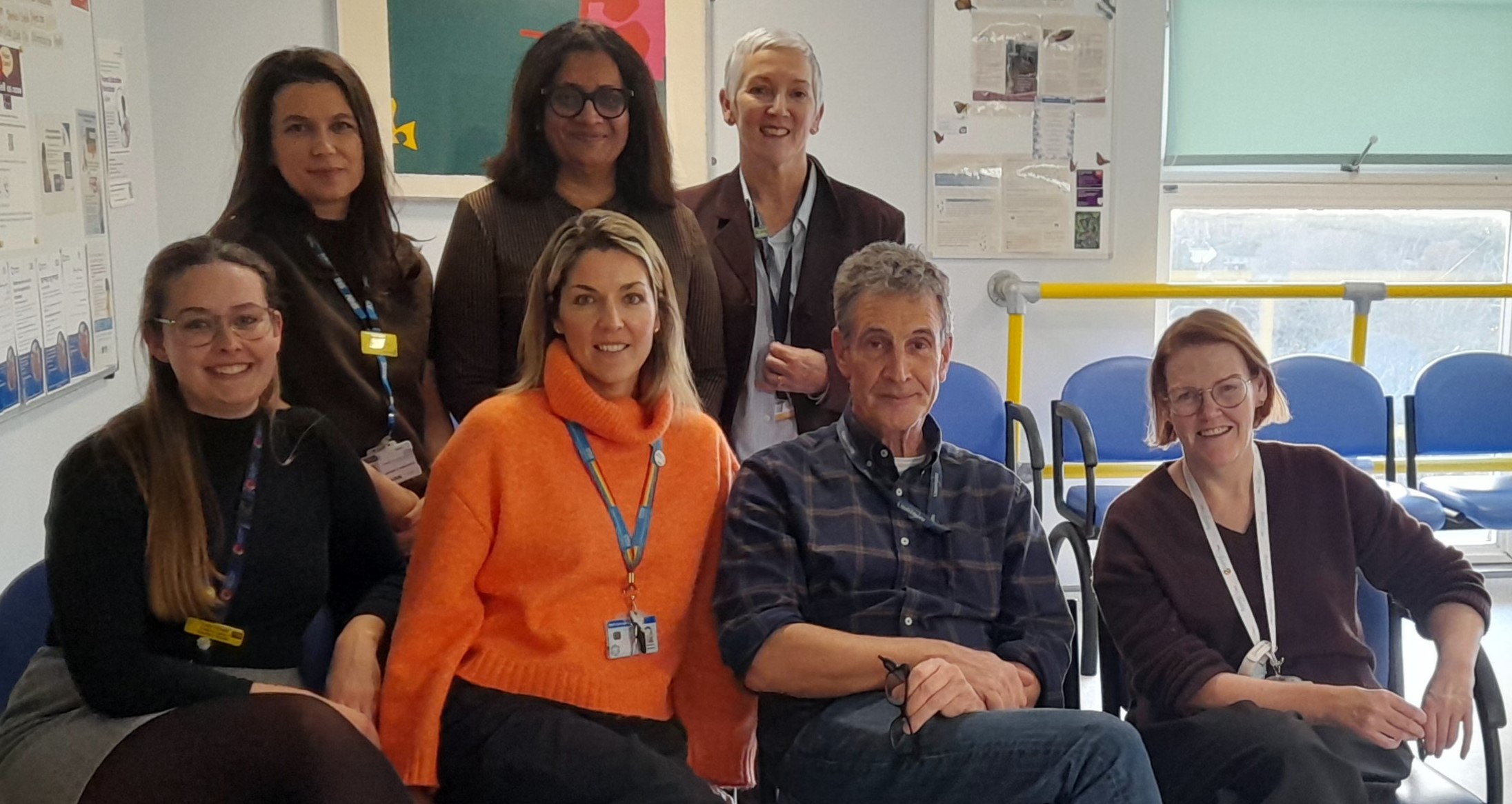
Clinical faculty at one of the Oxford sessions – left-right, back row: Maria Ivan, Maternal Fetal Medicine, Sub-specialty trainee; Aparna Reddy, Consultant in Obstetrics and Fetal Medicine and Preterm Birth Obstetric Lead, Buckinghamshire Healthcare; Eileen Dudley, Senior Programme Lead Patient Safety & Maternity/Neonatal Safety Improvement Programme Lead, Health Innovation Oxford and Thames Valley (HIOTV). Front row, left-right: Katy Hoare, Preterm Birth Specialist Midwife; Tara Gradwell, Programme Support Officer, HIOTV; Professor Lawrence Impey, Consultant in Obstetrics and Fetal Medicine; Ruth Curry, Consultant in Obstetrics and Subspecialist in Fetomaternal Medicine and Lead for Preterm Birth

Clinical faculty at one of the Bucks sessions – left-right: Eileen Dudley; Lauren Little, Specialist Midwife for Preterm Birth, Buckinghamshire Healthcare; Dr Aparna Reddy; Jane Hirons, Lead Midwife for Complex Pregnancies, Buckinghamshire Healthcare; Tara Gradwell, HIOTV.